
A typical label workshop
Asset tags are made in light-industrial workshops that combine label printing and converting with metal tag finishing.
You choose anodized aluminum, polyester or tamper-evident (VOID) material. We send a free PDF proof showing layout, logo and numbering before anything is printed.
The partner factory prints your artwork and adds sequential serial numbers, barcodes or QR codes to the numbering plan you approved.
Tags are cut to size and finished with adhesive backing or mounting holes. Before production we check your number range for duplicates and gaps, and against your previous orders if you have them.
Tags are packed by number range so each box is easy to match to your records, then shipped by international express from China. Production time, shipping time and duties are stated in your quote before you pay.
The exact process depends on the material, and your quote confirms how your tags are made. The images are AI-generated illustrations, not photos of our partner's facility.
Asset tags are made in light-industrial workshops that combine label printing and converting with metal tag finishing.

We send a free PDF proof with your logo, the first and last number and the barcode, and check the number range for duplicates and gaps before anything prints.

Polyester and tamper-evident labels are printed on roll stock with your logo, serial numbers and barcodes. Polyester labels get a clear laminate over the print.

For photo-anodized tags, the artwork is developed into the aluminum and sealed in the anodic layer, which protects it from scratches and weather.
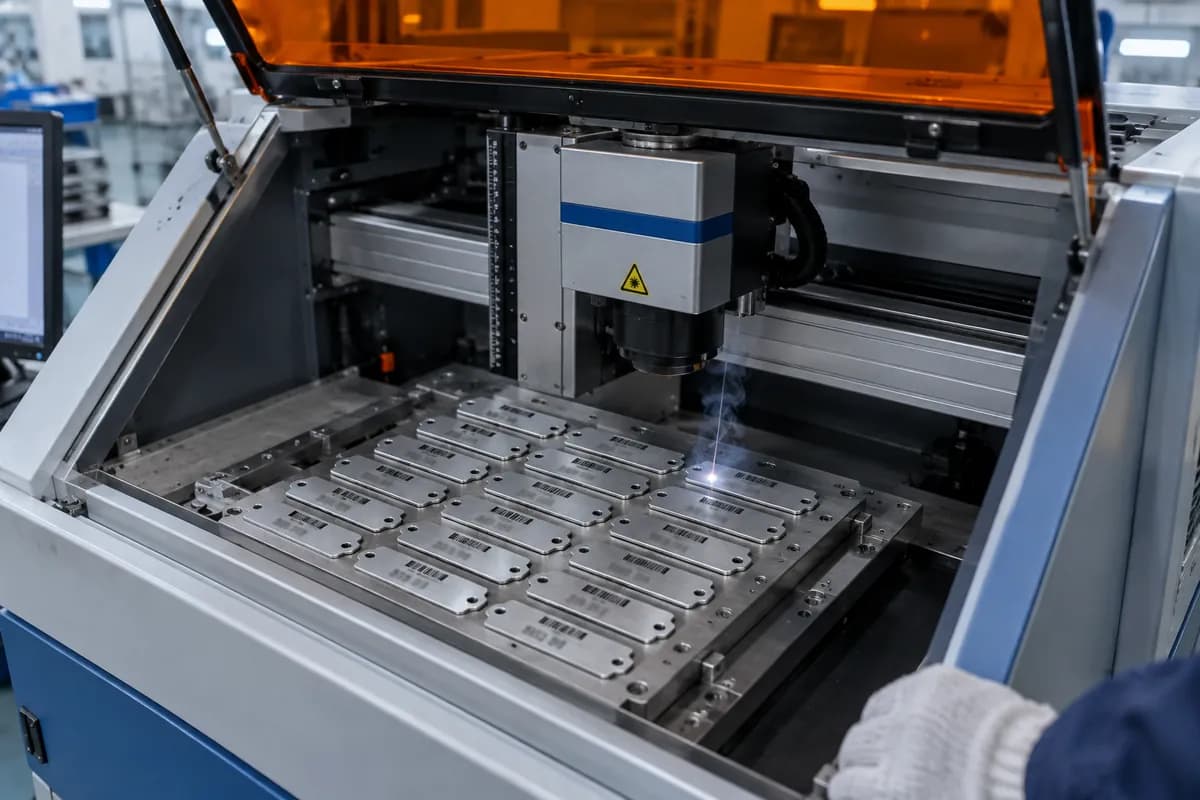
Serial numbers and barcodes can also be marked on aluminum with a fiber laser, tag by tag, from your numbering list.

On a converting line, label stock is printed, die-cut and rewound in one pass, with metal tags marked at a separate station.

Labels are cut to shape on a rotary die and the waste is stripped away. Tamper-evident film leaves a VOID pattern behind if someone peels it off.

Finished tags are checked for print quality, barcode readability and numbering before packing. Ask in your quote how your order is inspected.
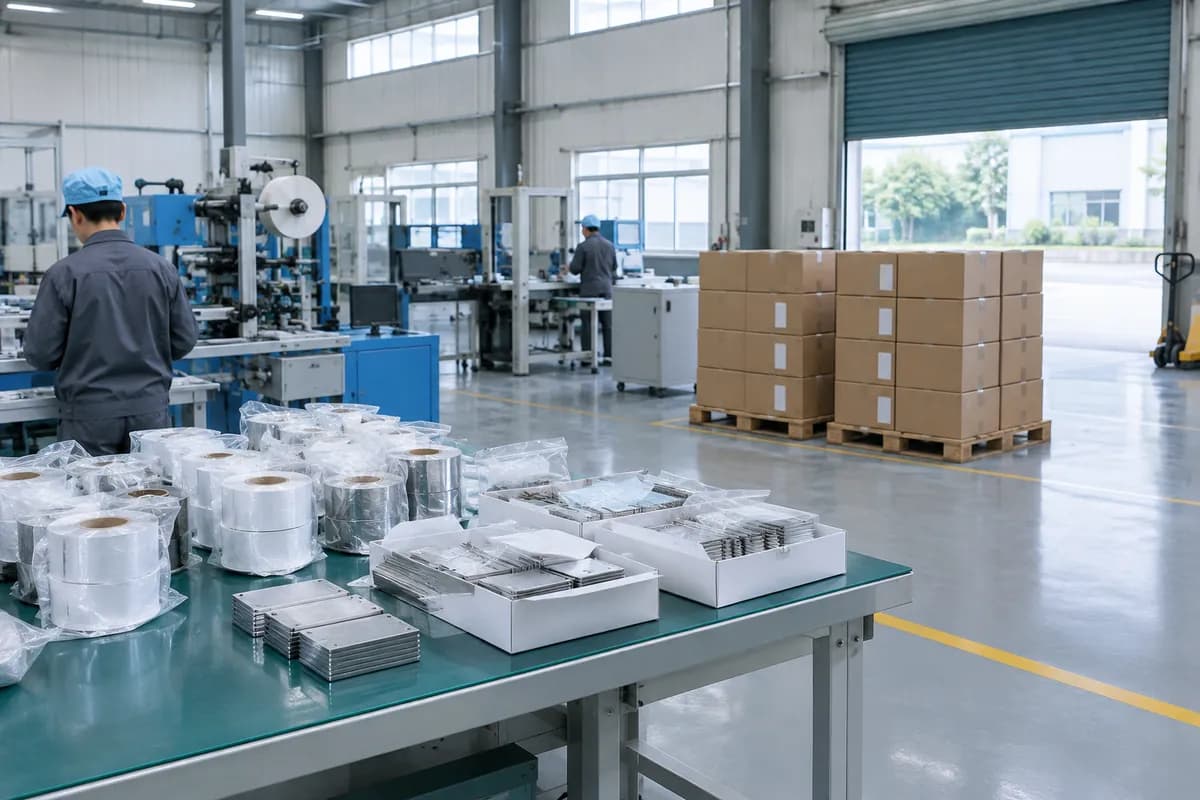
Tags are packed by number range so each box is easy to match to your records, then shipped by international express from China.
Minimums, lead times and material specifications are confirmed in your quote. Ask for samples if you want to test a material on your own equipment first.